
#ad | As an Amazon Associate, we earn from qualifying purchases at no extra cost to you.
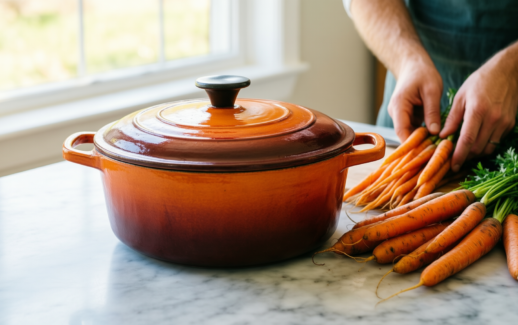
This 5-liter vessel addresses the specific friction point of maintaining raw cast iron by eliminating the need for seasoning entirely. The standout feature is the interior self-basting dimples, a design choice that actively redistributes moisture during long braises to prevent dryness. However, a key limitation is that the enamel coating, while durable against chipping, is not designed for the thermal shock of open-flame campfire cooking, making it strictly an indoor oven and stovetop tool. It is best for home cooks who prioritize consistent heat retention and effortless cleanup over the raw performance of seasoned iron.
The Maintenance Shift: Why Enamel Changes the Workflow
The primary reason this product enters the kitchen is to remove the ritual of maintenance that defines traditional cast iron. Raw iron requires a polymerized layer of oil to prevent rust and food sticking, a process that is easily ruined by water, soap, or high heat. The Andrew James cast iron casserole dish bypasses this entirely with its enamel coating. This means the pot can be washed with soap immediately after use without fear of degrading a protective layer. For a household that cooks multiple times a week, this shift from a post-cook maintenance routine to a simple wash significantly lowers the barrier to entry for using heavy cookware.
🛒 Check Price on Amazon →✓ See today's price & reviews
The “no seasoning required” specification is not just a marketing convenience; it alters the thermal behavior of the pot in a subtle but important way. Because the enamel is a glass-like coating, it does not absorb fats or develop a patina over time. This ensures that the surface characteristics remain consistent from the first day of use to the fifth year. Unlike raw cast iron, where a seasoned surface can become uneven or develop hot spots if the seasoning is compromised, this model offers a uniform non-reactive surface. This consistency is particularly valuable for bakers who need predictable steam retention, as the enamel does not interact with dough or absorb moisture from the cooking environment.
Buyers frequently report that the ease of cleaning is the single most appreciated aspect of this model. The smooth enamel surface prevents food particles from bonding aggressively, allowing for quick scrubbing. This is a direct contrast to raw cast iron, where stuck-on food often requires soaking or abrasive scrubbing with salt. The practical implication is that the pot is more likely to be used regularly because the effort to maintain it is minimal. This aligns with the product’s stated goal of being a “low-maintenance” essential, making it a viable option for cooks who want the thermal mass of cast iron without the daily upkeep.
Thermal Mass and the Bread Baking Use Case
Baking bread in a Dutch oven relies on the pot’s ability to retain heat and trap steam. The 5-liter capacity of this specific model provides a large thermal mass, which is critical for maintaining high internal temperatures when a loaf is introduced. The cast iron base ensures that the pot heats evenly and holds that heat even after the lid is removed for the final crust-forming stage. The enamel coating does not insulate the heat; rather, it protects the iron while allowing the full thermal properties of the metal to function. This means the pot can reach the high temperatures required for a good oven spring without the risk of rusting or sticking that might occur with uncoated iron in a humid oven environment.
The self-basting dimples, a feature specific to this design, play a dual role in baking. While primarily intended for braising meats to redistribute juices, these dimples also help in creating a more even steam distribution inside the pot. In a smooth-bottomed pot, steam can sometimes pool or create uneven moisture levels. The dimpled surface breaks up the boundary layer, ensuring that the steam is more uniformly distributed around the dough. This can lead to a more consistent crust formation across the top of the loaf. The orange exterior color is purely aesthetic, but the interior design is functional, aiming to maximize the efficiency of the cooking process.
Handling a full 5-liter pot of dough and water from a hot oven is a significant physical task. The weight of the cast iron, combined with the contents, requires careful lifting. The handles are designed to accommodate this weight, but buyers should be aware that the thermal mass means the pot remains hot for a considerable time after removal from the oven. The enamel coating does not add significant weight, but the cast iron base is substantial. This weight is a feature, not a bug, for bread baking, as it provides the stability needed to prevent the pot from tipping when opening the lid in a hot oven. The durability of the cast iron ensures that the pot will withstand the repeated thermal cycling of oven use without warping or cracking.
Ergonomics of Lifting a 5L Pot
The physical act of lifting a 5-liter pot filled with dough and water is a critical aspect of the user experience. The handles on this model are integrated into the body of the pot, providing a secure grip. However, the weight of the cast iron means that the pot is not light, even when empty. When full, the weight is substantial, and the handles must be gripped firmly to prevent slipping. The enamel coating on the handles does not provide additional grip, so users should be careful when the pot is hot. The design prioritizes durability over lightweight convenience, which is a trade-off that users must accept.
Steam Retention in Enamel vs. Raw Iron
The enamel coating affects steam retention in a way that is distinct from raw cast iron. Raw iron can develop a seasoned surface that may interact with steam, potentially altering the moisture content of the dough. The enamel surface is inert and does not interact with the steam, ensuring that the moisture levels inside the pot are solely determined by the dough and the water added. This predictability is beneficial for bakers who are trying to perfect their recipe, as it removes one variable from the equation. The smooth surface of the enamel also makes it easier to clean any flour or dough residue that may stick to the sides of the pot during the baking process.
Limitations: Acidic Braises and Heat Application
While the enamel coating offers many advantages, it has specific limitations that users should be aware of. The enamel is a glass-like material that is resistant to chipping and cracking under normal kitchen conditions, but it is not indestructible. One of the primary limitations is its reaction to highly acidic ingredients over long periods. While the enamel is non-reactive in the sense that it does not rust or leach metals into food, prolonged exposure to strong acids, such as tomato-based stews or wine-based braises, can potentially affect the surface over time. This does not mean the pot is unsafe, but it may lead to a slight change in the appearance of the enamel. Users should be mindful of this when cooking acidic dishes for extended periods.
Another limitation is the application of heat. This pot is designed for oven use and stovetop use on induction, gas, or electric ranges. However, it is not designed for open-flame cooking, such as on a campfire or a barbecue grill. The enamel coating can be damaged by direct, high-intensity flames, which can cause the enamel to crack or chip. This is a significant difference from raw cast iron, which can be used over open flames without issue. Users who plan to use the pot for outdoor cooking should be aware of this limitation and avoid exposing it to direct flame. The manufacturer’s warranty covers defects in materials and workmanship, but it does not cover damage caused by misuse, such as exposure to open flames.
The weight of the pot is also a consideration for users with limited mobility or strength. The 5-liter capacity is large, and the cast iron construction makes it heavy. This weight is a feature for heat retention, but it can be a drawback for users who find it difficult to lift heavy pots. The handles are designed to be sturdy, but the weight of the pot when full can be challenging for some users. It is important to consider the physical demands of using this pot before purchasing it, especially if it will be used frequently for large meals.
Positioning Against Raw Iron and Premium Enamel Brands
The Andrew James cast iron casserole dish occupies a specific niche in the market. It is positioned as a mid-range option that offers the convenience of enamel without the high price tag of premium brands like Le Creuset. The comparison with raw cast iron is straightforward: raw iron is cheaper and more versatile for high-heat searing, but it requires more maintenance. The enamel pot is more convenient and easier to clean, but it is heavier and not suitable for open-flame cooking. The choice between the two depends on the user’s priorities. If convenience and ease of cleaning are the top priorities, the enamel pot is the better choice. If versatility and low cost are the priorities, raw iron is the better choice.
When compared to premium enameled brands, the Andrew James model offers similar functionality at a more accessible price point. The enamel quality is comparable, and the thermal performance is similar. However, the premium brands often have more refined designs and better brand recognition. The Andrew James model is a solid choice for users who want the benefits of enameled cast iron without paying a premium for a brand name. The durability of the cast iron ensures that the pot will last for many years, and the manufacturer’s warranty provides additional peace of mind. The orange color is a distinctive feature that sets it apart from the more common black or cream colors of other brands.
The chip resistance of the enamel is a key factor in long-term durability. The cast iron base provides a solid foundation that resists warping and cracking. The enamel coating is applied to this base, creating a durable surface that can withstand the rigors of daily use. The self-basting dimples add an extra layer of functionality, making the pot more versatile for different cooking methods. The combination of durability and functionality makes this pot a valuable addition to any kitchen. The ease of cleaning and the lack of maintenance requirements make it a practical choice for busy home cooks.
Who Should Skip This Pot
This pot is not suitable for users who prioritize high-heat searing. The enamel coating is not designed for the direct, intense heat required for searing steaks or other meats. Raw cast iron is the better choice for this type of cooking, as it can withstand higher temperatures and provides a better surface for browning. If searing is a primary cooking method, this pot may not be the right choice. The enamel surface can be damaged by excessive heat, and it does not provide the same level of browning as raw iron. Users who want a pot for searing should consider a raw cast iron skillet instead.
The weight of the pot is also a factor that may deter some users. The 5-liter capacity is large, and the cast iron construction makes it heavy. Users who have limited strength or mobility may find it difficult to lift and handle the pot. The handles are sturdy, but the weight of the pot when full can be challenging. If lifting heavy pots is a concern, a smaller capacity or a lighter material may be a better option. The weight is a trade-off for the heat retention and durability of the cast iron, but it is an important consideration for some users.
Finally, users who plan to use the pot for outdoor cooking should be aware of the limitations of the enamel coating. The pot is not designed for open-flame cooking, and exposure to direct flames can damage the enamel. If outdoor cooking is a priority, a raw cast iron pot is the better choice. The enamel pot is best suited for indoor use, where it can be used on the stovetop and in the oven. The lack of versatility for outdoor cooking is a limitation that users should consider before purchasing.
Final Assessment for the Modern Kitchen
The Andrew James cast iron casserole dish is a well-designed tool for home cooks who want the thermal performance of cast iron without the maintenance burden. The enamel coating provides a non-reactive, easy-to-clean surface that is ideal for braising, stewing, and baking. The self-basting dimples add a unique feature that enhances moisture retention, making it a versatile tool for a variety of dishes. The 5-liter capacity is large enough for family-sized meals, and the durability of the cast iron ensures that the pot will last for many years.
The limitations of the pot are clear: it is not suitable for high-heat searing or open-flame cooking. The weight is substantial, and the enamel coating requires care to avoid damage from thermal shock. However, for users who prioritize convenience and ease of use, this pot is an excellent choice. The manufacturer’s warranty provides additional confidence in the product’s quality and durability. The orange color is a stylish addition that makes the pot a standout in any kitchen.
In summary, this product is best for home cooks who want a reliable, low-maintenance tool for braising and baking. It offers the heat retention of cast iron with the convenience of enamel, making it a practical choice for everyday cooking. The self-basting dimples and large capacity make it a versatile tool for a variety of dishes. While it has limitations, the benefits of the enamel coating and the durability of the cast iron make it a worthwhile addition to any kitchen. The ease of cleaning and the lack of maintenance requirements make it a practical choice for busy home cooks who want to enjoy the benefits of cast iron without the hassle.
🛒 Check Price on Amazon →✓ See today's price & reviews