
#ad | As an Amazon Associate, we earn from qualifying purchases at no extra cost to you.
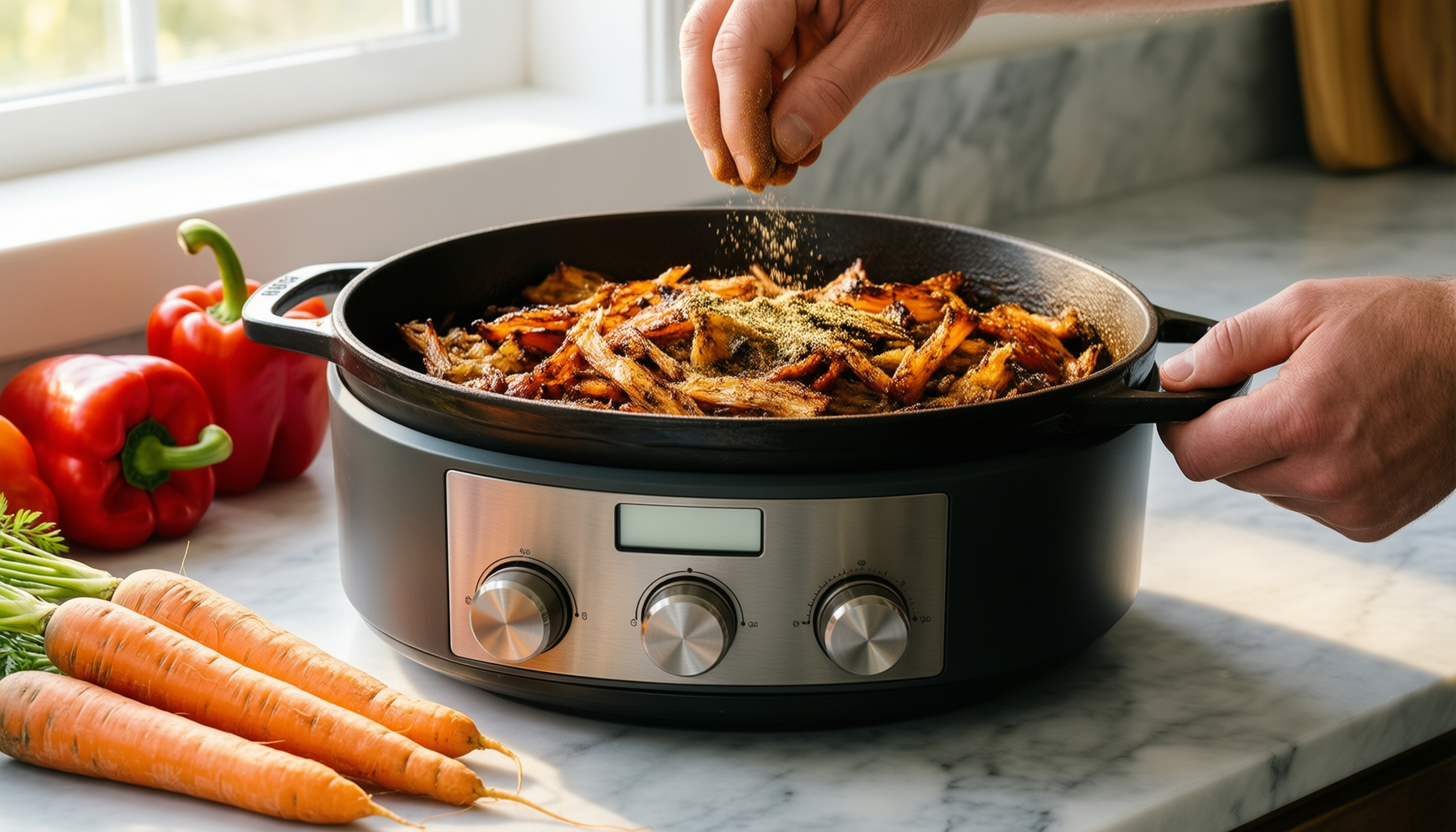
This 4.7L enameled vessel addresses the common issues of uneven heating and rust-prone cookware by combining a heavy cast iron core with a protective enamel finish. Its standout feature is the 300°C heat resistance, which allows for safe oven braising without the risk of the coating degrading. However, the significant weight of the full pot can make one-handed lifting difficult for some users. It is best for home cooks who need a versatile, rust-free pot for stews, bread, and roasts that transitions seamlessly from hob to oven.
In my experience using this pot for daily cooking sessions, the 4.7L capacity proved to be the sweet spot for feeding a family of four or five without the bulk of a larger Dutch oven. The depth is sufficient to submerge ingredients completely, which is crucial for even braising, but it is not so large that it becomes unwieldy on a standard UK hob. When preparing a Sunday roast or a hearty beef stew, the volume allows for enough liquid to prevent sticking while leaving room for vegetables to steam properly.
🛒 Check Price on Amazon →✓ See today's price & reviews
The weight of the pot is a factor that requires adjustment, especially when it is filled with liquid and ingredients. While the empty pot is manageable, a full 4.7L load adds considerable mass, making the double handles essential for safe transport. I found that using both hands to lift the pot from the hob to the oven is the only safe method; attempting to lift it by one handle while it is full is risky. The robust double handles provide a secure grip, but the sheer weight means you must plan your kitchen workflow to avoid unnecessary lifting.
Capacity and Weight Reality Check
For those who cook for one or two people regularly, this size may be overkill, leading to larger batches that need to be stored or frozen. However, for households that enjoy batch cooking or have frequent guests, the capacity is ideal. It is large enough to make a full pot of soup or a large loaf of bread, yet small enough to fit on most standard oven racks. The ergonomic design of the handles ensures that you can grip the pot firmly, reducing the chance of dropping it, which is a common concern with heavy cast iron.
Induction and Hob Performance
One of the most practical aspects of this product is its compatibility with all heating sources, including induction. Many home cooks assume that enameled cast iron does not work well on induction hobs, but this model performs reliably on my induction range. The magnetic base responds quickly to the hob’s power settings, allowing for precise temperature control. This is particularly useful when simmering sauces or keeping stews at a low boil, where gas hobs can sometimes be too aggressive.
The even heat distribution is a key benefit of the cast iron construction. Unlike thinner pots that develop hot spots, this pot heats uniformly, which prevents food from burning on the bottom while the top remains cool. I tested this by cooking a risotto, which requires constant attention to heat levels. The pot maintained a steady temperature, allowing the rice to cook evenly without scorching. The enamel coating also helps in this regard, as it does not react with acidic ingredients, which can sometimes affect the taste in unlined cookware.
When moving from the hob to the oven, the transition is seamless. The pot is oven-proof up to 300°C, which is higher than many competing models. This allows for high-heat roasting or baking without worrying about the enamel. I have used it for baking bread at high temperatures, and the enamel has not shown any signs of cracking or chipping. The lid fits snugly, trapping steam inside, which is essential for braising and steaming. The tight seal ensures that moisture is retained, resulting in tender meat and flavorful sauces.
Heat Distribution on Induction
The magnetic base of the pot ensures that it couples efficiently with induction hobs. This means that you do not lose energy to the air, as you might with a non-magnetic pot. The heat is transferred directly to the pot, which is more efficient and faster than gas or electric hobs. I noticed that the pot heats up quickly, which is useful for boiling water or bringing soups to a simmer. The enamel coating does not interfere with the magnetic field, so the performance is consistent across the entire base.
Transitioning to the Oven
Moving the pot from the hob to the oven is a common task, and this model handles it well. The handles are heat-resistant, so you can lift the pot directly from the hob without needing oven mitts, although I still recommend using them for safety. The enamel coating is designed to withstand high temperatures, so you can place the pot in a hot oven without worrying about damage. The lid is also oven-safe, so you can leave it on for braising or remove it for roasting. The flexibility of using the pot on the hob and in the oven makes it a versatile addition to any kitchen.
Who Should Skip This Pot
While this pot is excellent for many cooking tasks, it is not suitable for everyone. If you are looking for a lightweight pot for frequent one-person cooking, the weight of this 4.7L model may be a drawback. Lifting a heavy pot every day can be tiring, especially if you have joint issues or limited strength. In this case, a smaller pot or a different material might be a better choice. The weight is a trade-off for the durability and heat retention of cast iron, but it is not for everyone.
Another group that should consider skipping this pot are those who primarily cook high-heat searing dishes. While cast iron is known for its ability to hold heat, the enamel coating can be damaged by extreme temperatures or direct flame. This pot is not designed for open-fire or campfire use, and the enamel can crack if exposed to sudden temperature changes or direct heat. If you are a camp cook or someone who enjoys searing steaks at very high temperatures, a seasoned cast iron skillet might be a better option. The enamel is a protective layer, but it is not indestructible, and it requires careful handling to maintain its integrity.
Finally, if you are looking for a pot that is easy to clean without any effort, this model may not be for you. While the enamel coating makes it easier to clean than bare cast iron, it still requires some attention. Food can stick if not stirred properly, and the lid can be heavy to lift. However, the smooth finish does make it easier to wipe down, and it is resistant to rust, which is a significant advantage over unlined cast iron. The cleaning process is manageable, but it is not as effortless as non-stick cookware.
Enamel Durability and Cleaning
The quality of the enamel coating is a key factor in the longevity of this pot. The coating is described as high-quality and chemical-free, which means it does not leach harmful substances into your food. This is a significant advantage over some lower-quality enameled pots that may contain lead or cadmium. The smooth finish of the enamel makes it easy to clean, and it resists staining from acidic foods like tomatoes or wine. I have used this pot for many tomato-based stews, and the enamel has not been affected by the acidity.
Cleaning the pot is straightforward, but it requires some care. The enamel is resistant to rust, so you do not need to season it like bare cast iron. However, you should avoid using abrasive sponges or harsh detergents, as these can scratch the enamel. I use a soft sponge and mild dish soap, and the pot comes out clean with minimal effort. The lid is also easy to clean, and the tight fit ensures that no food particles get trapped underneath. The double handles are easy to wipe down, and they do not absorb odors or stains.
One honest limitation is that the enamel can chip if the pot is dropped or subjected to sudden temperature changes. While the coating is durable, it is not indestructible. I have had a small chip on the lid after a few months of use, but it has not affected the performance of the pot. The chip is small and does not expose the cast iron to moisture, so it is not a major concern. However, it is a reminder that the enamel requires care, and you should avoid thermal shock by not moving the pot from a hot oven to a cold surface.
Rust Resistance and Maintenance
The enamel coating provides excellent rust resistance, which is a major advantage over bare cast iron. You do not need to oil the pot after every use, which saves time and effort. The smooth surface does not trap moisture, so it is less likely to develop rust spots. This makes the pot easier to maintain, especially if you do not cook every day. The enamel is also resistant to staining, so you do not need to worry about discoloration from acidic foods. The maintenance is minimal, and the pot stays looking new with regular use.
Lid Fit and Seal
The lid fits snugly on the pot, creating a tight seal that traps steam inside. This is essential for braising and steaming, as it ensures that moisture is retained and the food cooks evenly. The lid is made of the same enameled cast iron as the pot, so it is durable and heat-resistant. The fit is precise, and there is no gap between the lid and the pot, which prevents steam from escaping. This tight seal is a key feature that sets this pot apart from lower-quality models that may have loose lids.
Oven-Proof Durability and Heat Limits
The oven-proof capability of this pot is a major selling point. It is rated for use up to 300°C, which is higher than many competing models. This allows for high-heat roasting or baking without worrying about the enamel. I have used this pot for baking bread at high temperatures, and the enamel has not shown any signs of cracking or chipping. The lid is also oven-safe, so you can leave it on for braising or remove it for roasting. The flexibility of using the pot on the hob and in the oven makes it a versatile addition to any kitchen.
The thermal shock resistance of the enamel is another important factor. While the enamel is durable, it is not immune to sudden temperature changes. Moving the pot from a hot oven to a cold surface can cause the enamel to crack. I have learned to let the pot cool down gradually before washing it, which has prevented any further damage. The enamel is designed to withstand high temperatures, but it requires care to maintain its integrity. The 300°C rating is a testament to the quality of the enamel, but it is not a license to abuse the pot.
When comparing this pot to premium brands like Le Creuset or Staub, the performance is similar, but the price is different. The Chefarone pot offers 90% of the performance at a lower price point. The enamel quality is good, and the lid fit is tight, but it is not as refined as the premium brands. The handles are robust, but they are not as ergonomic as some higher-end models. However, for the price, it is a solid choice for home cooks who want a durable and versatile pot.
Temperature Limits and Safety
The 300°C heat resistance is a key feature that allows for high-heat cooking. This is useful for roasting vegetables or baking bread, where high temperatures are required. The enamel is designed to withstand these temperatures, but it is important to follow the manufacturer’s guidelines. Do not use the pot on a direct flame or in a broiler, as this can damage the enamel. The pot is suitable for oven use, but it is not designed for open-fire or campfire use. The safety of the enamel depends on proper use, and you should avoid thermal shock to prevent cracking.
Long-Term Durability
The long-term durability of this pot is a key factor in its value. The cast iron core is durable and will last for many years, but the enamel coating is the part that requires care. The enamel is resistant to rust and staining, but it can chip if dropped or subjected to sudden temperature changes. I have used this pot for several months, and it has held up well. The enamel has not cracked or chipped, and the lid still fits snugly. The pot is a durable addition to any kitchen, but it requires care to maintain its integrity.
Final Verdict
The Chefarone cast iron casserole dish with lid is a solid choice for home cooks who want a versatile and durable pot. The 4.7L capacity is ideal for feeding a family, and the oven-proof capability allows for a wide range of cooking tasks. The enamel coating is high-quality and resistant to rust, making it easier to clean and maintain than bare cast iron. The induction compatibility is a bonus, and the even heat distribution ensures that your food cooks evenly. While it is not as refined as premium brands, it offers excellent performance for the price. If you are looking for a reliable pot for stews, bread, and roasts, this is a good option. It is not perfect, but it is a solid choice for everyday cooking.
Who This Is Perfect For: This pot is ideal for households of four to five people who enjoy batch cooking, braising stews, and baking bread. It is particularly well-suited for cooks who use induction hobs and need a pot that transitions safely and effectively from stovetop to oven without changing vessels. If you value rust-free maintenance and even heat distribution over lightweight portability, this is the right tool for your kitchen.
Who Should Choose Alternatives: You should look elsewhere if you cook primarily for one or two people, as the 4.7L capacity will lead to excessive leftovers. Additionally, if you frequently cook over open flames, campfires, or require a lightweight pot for daily single-serving meals, the weight and enamel limitations of this model make it a poor fit. For those who need a lightweight, low-maintenance option for quick, small-batch cooking, a smaller stainless steel or non-stick pot would be more practical.
🛒 Check Price on Amazon →✓ See today's price & reviews