
#ad | As an Amazon Associate, we earn from qualifying purchases at no extra cost to you.
Disclosure: As an Amazon Associate I earn from qualifying purchases.
The le creuset marseille saucepan addresses a specific challenge for home cooks: maintaining a stable, gentle simmer on high-output UK hobs where standard aluminum pans often scorch easily. Its standout feature is the deep, rounded geometry combined with the distinctive “Marseille” glaze, which provides a unique visual identifier for quick grab-and-go cooking while offering exceptional heat retention. The primary honest limitation is the significant weight of the 2.9kg cast iron body, which makes it impractical for one-handed lifting or frequent travel. This model is best for home cooks who prioritize slow-cooking sauces, melting chocolate, or reducing liquids on induction or gas stoves and are willing to trade portability for superior thermal stability.
🛒 Check Price on Amazon →✓ See today's price & reviews
The 16cm Gap: Why Your Current Small Pans Fail on UK Hobs
Most standard 16cm saucepans found in UK supermarkets are designed with a flat, thin base that heats up rapidly but offers almost no thermal inertia. When you place a thin aluminum pan on a large gas ring, the flame often extends beyond the base’s diameter, creating intense hot spots that scorch milk or reduce wine too quickly. The le creuset marseille saucepan addresses this mismatch through its substantial cast iron mass. The 2.9kg weight acts as a thermal buffer, absorbing the erratic energy spikes from the burner and distributing them evenly across the entire cooking surface. This means that even if your gas flame is slightly too high, the pan’s thermal mass prevents the liquid from boiling over or burning, a common frustration with lighter cookware in British kitchens where gas hobs are often powerful.
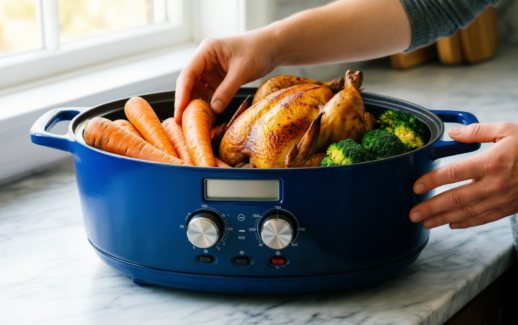
The specific geometry of this model also plays a crucial role in its performance. Unlike many flat-bottomed pans that concentrate heat at the center, the rounded base of this saucepan allows for more even convection currents. When you are reducing a sauce or heating milk, the liquid circulates more effectively, preventing the bottom layer from scorching while the top remains cool. This is particularly noticeable when using the pan on an induction hob, where the magnetic field interacts with the cast iron base to create a very stable heat source. The “Marseille” color, a vibrant blue, is not just an aesthetic choice; it serves as a functional identifier. In a crowded kitchen, being able to spot your specific pan instantly among a collection of black or cream cookware saves time and reduces the chance of grabbing the wrong tool for a delicate task.
Furthermore, the inclusion of a helper handle is a subtle but critical design element that addresses the weight issue. While the main cast iron handle is sturdy, the 2.9kg weight becomes unwieldy when the pan is full of liquid. The helper handle allows you to lift the pan with both hands, distributing the weight and providing better control. This is a significant improvement over many smaller saucepans that only have a single long handle, which can feel precarious when filled to capacity. The combination of the deep capacity (1.2L) and the dual-handle design makes this pan suitable for tasks that require more volume than a standard 12cm pan but less than a full-sized saucepan, filling a specific gap in the cookware lineup that is often overlooked by mass-market brands.
Heat Retention Reality Check: Induction vs. Gas Performance
The thermal mass of the 1.2L capacity is the defining characteristic of this pan’s performance on different hob types. On a gas stove, the primary challenge is managing the flame’s direct contact with the pan. The enameled cast iron base of the le creuset marseille saucepan heats up slower than aluminum or stainless steel, but once it reaches temperature, it holds that heat for a remarkably long time. This is ideal for delicate tasks like melting chocolate, where a sudden spike in temperature can cause the cocoa solids to seize. You can remove the pan from the heat entirely and continue stirring, using the residual heat to keep the chocolate smooth without any risk of burning. This level of control is difficult to achieve with thinner pans that cool down as quickly as they heat up.
On induction hobs, the performance is equally impressive, though the mechanism is different. Induction hobs generate heat directly within the cookware through electromagnetic fields, which means the pan itself becomes the heat source. The cast iron base of this model is highly compatible with induction technology, ensuring efficient energy transfer. Unlike some older enameled cast iron products that had poor induction compatibility, this model is specifically designed for all hob types, including induction. The result is a very consistent simmer that is easy to maintain. You can set the induction hob to a low setting and leave the pan unattended for several minutes without the liquid boiling over or reducing too rapidly. This stability is a significant advantage over thinner cookware, which often requires constant attention to prevent temperature fluctuations.
When comparing the thermal performance to thinner aluminum alternatives, the difference is stark. Aluminum pans are excellent for quick-boiling tasks like heating pasta water, but they are poor at maintaining a steady simmer. The le creuset marseille saucepan excels in the latter category. The even heat distribution ensures that there are no hot spots, which is crucial for reducing wine or making caramel. The anti-drip pouring lip and vented lid with a steam hole further enhance the usability by allowing you to control the amount of steam released, which is essential for preventing pressure buildup when the lid is on. The heat-resistant knob and handle ensure that you can safely adjust the lid or move the pan even when it is at high temperatures, adding a layer of safety that is often missing in less expensive cookware.
Managing Temperature Spikes on Gas Hobs
One of the most common complaints about cast iron cookware on gas hobs is the difficulty in controlling temperature spikes. However, the le creuset marseille saucepan mitigates this issue through its design. The deep walls and wide base allow for a larger surface area for heat exchange, which helps to dissipate excess heat more evenly. When you are reducing a sauce, you can turn the heat down slightly and the pan will continue to simmer gently without the liquid splashing over. This is a direct result of the high thermal mass of the cast iron, which acts as a heat sink. In contrast, a thin aluminum pan on the same gas ring would likely boil violently, leading to splashing and potential scorching. The ability to manage these temperature spikes is what makes this pan a superior choice for tasks that require precision.
Induction Efficiency and Energy Usage
Another aspect to consider is the energy efficiency of the pan on induction hobs. Because the cast iron base is in direct contact with the induction field, there is minimal heat loss to the surrounding air. This means that the pan heats up more efficiently than it would on a gas hob, where a significant amount of energy is lost to the flame and the surrounding air. The le creuset marseille saucepan takes advantage of this efficiency, allowing you to cook with less energy overall. This is not only beneficial for your electricity bill but also for the environment. The even heat distribution also means that you do not need to use as high a setting to achieve the desired cooking temperature, further reducing energy consumption. This makes the pan a practical choice for those who are conscious of their energy usage.
Marseille vs. Classic: Is the Color Upgrade Worth the Premium?
The primary difference between the Marseille and the standard Classic line of this brand lies in the glaze and the aesthetic appeal. The Marseille glaze is a vibrant blue that is visually striking and adds a pop of color to the kitchen. However, the practical difference is minimal. Both lines are made from high-quality enameled cast iron and offer the same level of heat retention and durability. The Classic line, with its more subdued colors, may be preferred by those who want a more traditional look. The Marseille line, on the other hand, is designed for those who want a more modern and vibrant appearance. The choice between the two is largely a matter of personal preference rather than performance.
In terms of weight and handle ergonomics, there is no significant difference between the two lines. Both the Marseille and the Classic saucepans weigh 2.9kg and feature the same cast iron handle and helper handle design. The ergonomics are identical, with the main handle providing a secure grip and the helper handle allowing for two-handed lifting. The only difference is the color of the glaze, which does not affect the pan’s performance. The “Signature” branding is a marketing term that indicates a higher-end line of products, but in the case of the 16cm saucepan, the performance is the same as the Classic line. The premium price for the Marseille line is therefore justified by the aesthetic appeal rather than any tangible performance benefits.
The durability of the glaze is another factor to consider. Both the Marseille and the Classic glazes are designed to be durable and resistant to chipping and scratching. However, the vibrant blue of the Marseille glaze may show wear and tear more noticeably than the more subdued colors of the Classic line. If you are likely to be rough with your cookware, the Classic line may be a better choice as it will hide minor scratches and chips more effectively. The Marseille line, on the other hand, is a statement piece that is designed to be seen. If you are willing to take extra care with your cookware, the Marseille line is a beautiful addition to any kitchen. The choice between the two ultimately comes down to whether you prioritize aesthetics or durability.
Glaze Durability and Aesthetic Longevity
The durability of the enameled cast iron glaze is a critical factor in the long-term value of the pan. The le creuset marseille saucepan features a high-quality glaze that is designed to withstand daily use. However, the vibrant blue color is more susceptible to showing minor imperfections than the more neutral colors available in the Classic line. If you are a heavy user who frequently moves the pan around or uses metal utensils, you may notice scratches or chips on the Marseille glaze more quickly. The Classic line, with its more subdued colors, is more forgiving in this regard. The choice between the two depends on how much you value the aesthetic appeal of the vibrant blue against the practicality of a more durable, neutral color.
Handling and Ergonomic Differences
While the weight and handle design are identical between the Marseille and Classic lines, the visual impact of the color can affect how you perceive the pan’s handling. The vibrant blue of the Marseille line makes the pan more noticeable in the kitchen, which can be a positive or a negative depending on your preference. If you want your cookware to be a focal point, the Marseille line is the better choice. If you prefer a more understated look, the Classic line is more suitable. The ergonomic design of the handles is the same in both lines, with the main handle providing a secure grip and the helper handle allowing for two-handed lifting. The choice between the two is therefore a matter of personal style rather than functional difference.
Who Should Skip This Pan: Three Specific Kitchen Scenarios
The le creuset marseille saucepan is not suitable for everyone. If you primarily use non-stick pans for cooking eggs and fish, this pan is a poor fit. Cast iron is not non-stick, and while it can be seasoned to some extent, it is not as effective as a dedicated non-stick pan for these tasks. The enameled surface can also be damaged by high heat and acidic foods, which are common in egg and fish cooking. If your primary cooking style involves quick, high-heat searing or non-stick frying, this pan is not the right choice for you.
Another group that should skip this pan are those with limited counter space who need to store their cookware vertically. The 2.9kg weight of the pan makes it difficult to hang on a wall or store in a narrow cabinet. The handle design, while sturdy, is not designed for hanging, and the weight of the pan can cause damage to the hanging mechanism. If you have a small kitchen with limited storage options, this pan may not be practical for you. You would need to find a way to store the pan horizontally, which can take up valuable counter space.
Finally, those seeking ultra-lightweight cookware for frequent camping or travel should avoid this pan. The 2.9kg weight is significant, and carrying it in a backpack or suitcase can be a burden. The pan is also not designed for outdoor use, and the enameled surface can be damaged by rough handling. If you are a frequent camper or traveler, a lighter, more durable pan made from aluminum or stainless steel would be a better choice. The le creuset marseille saucepan is a home cookware item that is designed for the kitchen, not for the outdoors.
Non-Stick Cooking and Acidic Foods
One of the main reasons to skip this pan is if you frequently cook acidic foods like tomatoes or wine. While the enameled surface is resistant to acid, prolonged exposure to highly acidic foods can cause the glaze to discolor or chip over time. If your cooking style involves a lot of tomato-based sauces or wine reductions, you may want to consider a stainless steel pan, which is more resistant to acid. The le creuset marseille saucepan is best suited for less acidic tasks like boiling milk, reducing stock, or making caramel. If your cooking style is heavily based on acidic ingredients, this pan may not be the best choice for you.
Storage and Space Constraints
The size and weight of the pan also make it a poor fit for kitchens with limited storage space. The 35×17.3×14.2cm dimensions are substantial, and the 2.9kg weight makes it difficult to store in narrow cabinets or on wall hooks. If you have a small kitchen, you may find that the pan takes up too much space and is difficult to access. In this case, a smaller, lighter pan would be a more practical choice. The le creuset marseille saucepan is a premium item that is designed for kitchens with ample storage space and a dedicated cookware collection. If you have a compact kitchen, this pan may not be the right fit for you.
Caring for the Marseille Glaze: Preventing Chipping and Staining
Caring for the le creuset marseille saucepan is essential to maintaining its appearance and functionality. The enameled surface is durable, but it can be damaged by thermal shock, abrasive cleaning, and acidic foods. To prevent chipping and staining, you should avoid sudden temperature changes. Do not place the pan on a hot stove when it is cold, or put it in the dishwasher when it is hot. Allow the pan to cool down gradually before washing it. This will prevent the enamel from cracking due to thermal shock.
Cleaning the pan is easy, but you should use a soft sponge or cloth to avoid scratching the glaze. Avoid using abrasive cleaners or steel wool, which can damage the enamel. For stubborn stains, you can soak the pan in warm, soapy water for a few minutes before wiping it clean. The anti-drip pouring lip and vented lid make it easy to rinse the pan without water getting into the handle. The heat-resistant knob and handle are also easy to clean, and the helper handle can be wiped down with a damp cloth. Regular care will keep the pan looking new for years to come.
Storage is another important aspect of caring for the pan. The 2.9kg weight means that you should store the pan in a way that prevents it from chipping the enamel. Avoid stacking the pan on top of other cookware, as the weight can cause chipping. Instead, store the pan in a dedicated slot or on a shelf where it is not subject to pressure. If you have a lot of cookware, consider investing in a rack or organizer that can accommodate the size and weight of the pan. Proper storage will protect the glaze and extend the life of the pan.
Preventing Thermal Shock Cracking
Thermal shock is one of the biggest threats to enameled cast iron cookware. The le creuset marseille saucepan is designed to withstand a range of temperatures, but sudden changes can cause the enamel to crack. To prevent this, always allow the pan to cool down gradually before washing it. Do not run cold water over a hot pan, as this can cause the enamel to crack. If you need to cool the pan quickly, place it on a heat-resistant surface and let it cool naturally. This simple step will protect the glaze and ensure that the pan lasts for many years.
Storing the Heavy Pan Safely
The weight of the pan is a significant factor in its storage. The 2.9kg weight means that you need to be careful when storing the pan to avoid chipping the enamel. Avoid stacking the pan on top of other cookware, as the weight can cause chipping. Instead, store the pan in a dedicated slot or on a shelf where it is not subject to pressure. If you have a lot of cookware, consider investing in a rack or organizer that can accommodate the size and weight of the pan. Proper storage will protect the glaze and extend the life of the pan. By following these simple care tips, you can ensure that your le creuset marseille saucepan remains in excellent condition for years to come.
Final Verdict: Who Is This Pan For?
The le creuset marseille saucepan is a specialized tool rather than a general-purpose workhorse. It is the ideal choice for home cooks who frequently prepare delicate sauces, reduce liquids, or melt chocolate and value the stability of cast iron over the speed of aluminum. If you have a gas or induction hob that tends to run hot and you find yourself constantly adjusting the flame to prevent scorching, the thermal mass of this 2.9kg pan will solve that problem. It is also well-suited for those who appreciate the visual distinction of the Marseille glaze and have the storage space to accommodate its size.
However, you should choose an alternative if your cooking style relies heavily on high-heat searing, non-stick frying, or the rapid boiling of large volumes of water. The weight makes it impractical for one-handed use, and the enameled surface requires more careful handling than stainless steel or aluminum. If you have limited counter space, need to hang your cookware on a wall, or frequently travel with your cookware, the 2.9kg weight and rigid structure of this pan will be a hindrance rather than a help. For those specific needs, a lighter, more flexible pan is the better investment.
🛒 Check Price on Amazon →✓ See today's price & reviews